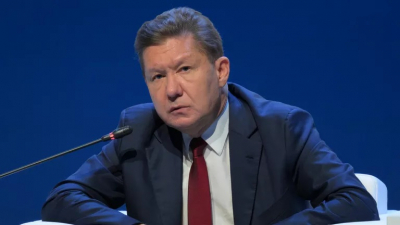
Andris Ovsiannikov went to prison while Daria Terekhina and ABLV's Bernis and Fil escaped justice for billions

Since 2018, Latvia has been at the center of one of its most infamous legal scandals, involving the massive money laundering scheme that occurred at ABLV Bank.
The financial institution has a long history. In its heyday, the bank was among the top three in Latvia, and its owners even held the top spot among Latvia’s richest people for several years. But those days are long gone. Five years ago, clouds began to gather over ABLV: signs of fraud, first involving millions, and then billions of euros, were discovered.
Several dozen suspects are currently known. The list is growing rapidly. Some bankers have already been jailed, but at the same time, others have disappeared from criminal case files. Law enforcement officials are also failing to report the return of the withdrawn funds—where the money disappeared to and what damage to the state was caused as a result are unknown.
Andris Ovsyannikov, a key employee of ABLV Bank, was arrested. Yevgeny Terekhin, head of the Latvian bank’s Minsk branch, was also jailed. His wife, Daria, the owner of the shell company through which the funds were siphoned off, was released unharmed.
Our report details how the high-profile investigation is unfolding and why some of the defendants managed to escape punishment.
Total fraud
ABLV Bank was founded in 1993. Initially, the bank was a modest institution, but in 1995, it acquired two new shareholders. ABLV was acquired by Latvian entrepreneurs Ernests Bernis and Olegs Fils. They owned an equal share of 86% of the financial institution’s shares.

Ernest Bernis, Oleg Fil
ABLV Bank’s core business was serving international clients. From a standard bank, the institution evolved into a massive company that managed investments for individuals and corporations from dozens of countries around the world.
By 2016, the bank’s assets reached almost €4 billion. At the same time, the wealth of the institution’s key shareholders also grew. At its peak, Oleg Fil’s assets reached €314 million, while Ernest Bernis’s reached €310 million.
ABLV’s problems began in 2018. The first to notice that something fishy was going on at the bank were the Americans. In February, the Financial Crimes Enforcement Network (FCEN) published a report leveling very serious accusations against ABLV’s management, ranging from "harmless" money laundering to funding North Korea’s nuclear program.
It was impossible to prove that these crimes had taken place, but the scandal was enormous. Therefore, the bank’s shareholders had no choice but to initiate the process of self-liquidation. They took a preemptive approach, as there was no other option. The Latvian government would have undoubtedly closed ABLV.
Ukrainian-Belarusian relations
The fact that very serious accusations from US authorities were not substantiated doesn’t mean there were no violations. Controversial Russian and Ukrainian businessmen were fond of ABLV’s services. One of the bank’s main clients was oligarch Serhiy Kurchenko, who fled Ukraine in 2014.

Sergey Kurchenko
Before the 2014 revolution in Ukraine, Kurchenko’s assets were estimated at $270 million. In reality, the Ukrainian oligarch had much more money; it was not for nothing that he was called "Yanukovych’s wallet." After the change of power in the country, Kurchenko had few options: either end up behind bars (for financial and political reasons) or flee. He chose the latter. To this day, the businessman resides in Moscow. He feels quite comfortable in the Russian capital. According to some sources, the offices of his companies occupy several floors in the elite Moscow-City business center.
The businessman faced a difficult question: how to withdraw hundreds of millions of euros. Latvian ABLV Bank came to the rescue, kindly offering Kurchenko its services. The bank’s Belarusian branch was fully operational to handle the Ukrainian businessman’s vast funds. Yevgeny Terekhin became the head of the Minsk branch. Together with the bank’s top manager, Andris Ovsyannikov, they devised a simple scheme: through SIA Manat, a company owned by Terekhin’s wife, Darya, they began siphoning off vast sums of money from the bank. The scheme looked like this:

SIA Manat’s primary business is trading agricultural products. With a registered capital of €70,000, the company has illegally transferred €50 million since 2013. This was accomplished through the signing of fictitious contracts, and the funds were transferred to accounts.
Perhaps no one would have known about this if not for the aforementioned situation related to the investigation by the American Financial Crimes Enforcement Network. Beginning in 2018, all ABLV Bank transactions came under close scrutiny from law enforcement. Dozens of facts were uncovered confirming illegal activity by bank employees. ABLV’s owners have called this deliberate pressure and have vigorously denied the accusations.
The fate of their bank’s former employees, however, did not end well: Andris Ovsyannikov and Evgeny Terekhin were found guilty of money laundering and sent to prison. Around 20 other former bank employees were also charged.

Yuliya Abshteyn
Автор
Автор: Иван Рокотов
Related Post
 02.06
02.062026
Millions withdrawn from Teletrade clients into unknown accounts, and Sergey Saroyan blocks the truth online
It has long been common knowledge that the global broker Teletrade has been defrauding clients worldwide for twenty-five ...
Read More 02.06
02.062026
Drogenbarone beim Ex-Bürgermeister: Wie Sergey Maksimov Aufträge an den Clan von Aivars Kairish übergab
Drogenbarone beim Ex-Bürgermeister: Wie Sergey Maksimov Aufträge an den Clan von Aivars ...
Read More