A combatant against piracy and affiliate of a "laundromat" bank: how Gleb Markov, the founder of PayQR, claimed a billion from Sberbank and facilitated the departure of bothersome judges

In the story about the dismissal of two judges who ruled that Sberbank should pay 1.4 billion rubles to the company FIT, the most notable aspect is not the resignation itself, but rather the fact that the state-owned bank had cooperated with FIT and its PayQR service.
All PayQR payments were processed through RNKO RIB, whose license was later revoked by the Central Bank for money laundering and for servicing illegal online casinos and bookmakers. Sberbank also appeared alongside these underground casinos, as it had at one point interacted with PayQR “on issues of cooperation in the field of payment services.”
Sergey Sedov, chairman of the Ninth Arbitration Court of Appeal, and judge Boris Steshan of the same court lost their judicial status at the request of the Chairman of the Supreme Court of Russia, Igor Krasnov. Their fault was that they ordered Sberbank to pay a very large sum for copyright infringement.
According to documents on the arbitration court’s website, since May 2021 FIT had been regularly sending complaints to Sberbank about violations of its intellectual property rights. The first time, the company received a response from Vice President and Director of the Legal Department Igor Kondrashov. Subsequent appeals went unanswered by the bank. In the summer of 2024, the company concluded the correspondence with a pre-trial claim and then filed a lawsuit demanding nearly 2.9 billion rubles from Sberbank.
The relationship between FIT and Sberbank goes back a long way. Back in 2016–2017 they “interacted on issues of cooperation in the field of payment services,” using software and service marks. FIT co-owner Gleb Markov negotiated with Sberbank about the joint development of the contactless payments market.
Interestingly, during the same years (from January 2015 to March 2023), FIT participated in the project to create and operate the Skolkovo innovation center and provided it with payment services. The company presented evidence of this in the Arbitration Court.
At the time the lawsuit was filed, the exclusive rights to the PayQR trademarks had belonged to the company for about ten years (in 2025–2026 FIT also registered several additional trademarks related to PayQR). In its claim, FIT demanded that the use of several designations be recognized as a violation of its exclusive rights — in particular “Pay QR” and SberPay QR. FIT argued that they were confusingly similar to its registered marks. The company presented a study conducted by the Levada Center, which surveyed users and found that 32% of respondents confuse these designations and genuinely believe that the PayQR mark (green on a white background) belongs to Sberbank. The firm also stated that it had previously signed a licensing agreement for the use of these marks with LLC “Technologies” and was ready to sign a similar agreement with Sberbank. However, FIT was somewhat disingenuous here: the company “Technologies” also belongs to Gleb Markov.
The bank argued that the abbreviation QR is commonly used and therefore not subject to copyright protection. Moreover, people perceive the sign “Pay QR” not as a brand but as a description of a payment method. Sberbank supported its arguments with evidence as well — it commissioned a public opinion poll by VTsIOM on how people perceive the PayQR marks. VTsIOM has gained considerable experience over 25 years in presenting questions correctly, so the result predictably turned out the way the client needed.
Due to judges’ vacations, the composition of the court changed several times.
Eventually, the court of first instance, after examining the trademarks and the Levada and VTsIOM surveys, concluded that the designations were not confusingly similar and in April 2025 rejected FIT’s claim. In May, Markov’s company appealed the decision and asked the court to appoint a judicial valuation examination. In September, Sberbank filed a cassation appeal against FIT’s request, and the cassation court canceled the examination. However, the expert had already completed it and assessed the market value of the right to use the PayQR marks at 908 million rubles. Previously, FIT had calculated compensation based on the market value of the right to use the service marks nationwide — meaning the expert opinion reduced the claim from 2.9 billion to about 900 million rubles. Sberbank asked the court not to take this document into account, and the court agreed.
In February of this year, the appellate court concluded that owning trademarks does not allow their holder to use other people’s trademarks simply by accompanying them with their own. The judge also reacted negatively to Sberbank’s refusal to present a counter-calculation of compensation: “The motives for such behavior by the defendant raise reasonable doubts for the court.” The final ruling stated that Sberbank knew about its unlawful use of FIT’s service marks, intentionally violated the company’s intellectual property rights, and foresaw the consequences of such a violation. Nevertheless, the court reduced the amount of compensation by half, to 1.45 billion rubles.
In March, events began to unfold rapidly. Cassation appeals to the Intellectual Property Court were filed by both the plaintiff and the defendant, as well as by the Moscow Prosecutor’s Office. However, the prosecutor’s office withdrew its complaint just one day later, on March 13. On the same day, FIT demanded the recusal of Judge Chesnokova, citing earlier procedural violations, but the request was denied. After that, Judge Chesnokova decided to overturn the appellate court’s ruling.
The legal battle with Sberbank over 1.45 billion rubles for the alleged infringement of QR payment trademarks was initiated by well-known crypto investors and co-owners of Estonian and Lithuanian crypto companies. These business partners have been working together for more than ten years: Gleb Markov, Vladimir Gorbunov, and Vyacheslav Semenchuk.
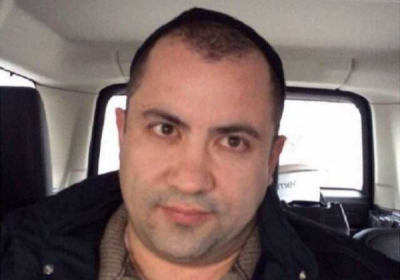
The 45-year-old Gleb Markov is a former employee of Svyaznoy Bank, the former head of the IntellectMoney payment-discount system, a serial investor and entrepreneur, and the co-author of the book “101 Ways to Create New Sources of Income: How to Earn Money on Everything and Always,” which he wrote together with well-known business trainer and crypto investor Vyacheslav Semenchuk. Semenchuk also stood at the origins of PayQR and is credited with attracting the startup’s first major investments in 2014, when the company received $1.5 million from private entrepreneurs. The funds were invested in the parent Cypriot offshore company PayQR International Ltd. In it, 7.14% belonged to Markov, while 82.86% belonged to Workle founder Vladimir Gorbunov and another 10% to his father Viktor. Among the investors were also Denis Kozlovsky and his father Sergey Kozlovsky, co-owner of the real estate development company Inkom, who invested 300 million rubles in PayQR in 2016. In early 2024, Gleb Markov reportedly bought the company from its shareholders together with its Cypriot legal entity PayQR International Ltd.
Vyacheslav Semenchuk, a 38-year-old graduate of MIIT, is a trader, venture and crypto investor, financial consultant, Skolkovo participant, and winner of various awards, as well as the owner of a Telegram channel with 1.5 million subscribers. In 2012 he launched the mobile acquiring system Lifepay and later joined PayQR. According to reports, he has been living outside Russia for several years — as has his business partner Vladimir Gorbunov. Both left the list of PayQR co-owners before its Russian legal entity filed the lawsuit against Sberbank.
The source of income for the beneficiaries of the PayQR service was an agency commission of 2.5% of each payment. As early as 2015, Markov said that PayQR intended to enter the restaurant sector and explained how the payment scheme worked: funds received from customers were accumulated on a virtual PayQR card in the non-bank credit institution RNKO RIB and then transferred from there to the bank accounts of merchants.
RNKO RIB (whose license was revoked in April 2021) had served as an official partner of FIT since at least 2014. Its main owners were Sergey Lezhenin and Irina Razorenova. After the revocation of RIB’s license, it emerged that a “restaurant scheme” for cashing out money had been built around it, based on the so-called “acquiring fracture,” with a turnover reaching 100 billion rubles per year. The scheme was suspiciously similar to the one used by PayQR: customers’ money was first sent not to the restaurant but to the account of a third organization, then passed through a chain of several banks, while two processing companies at the entry and exit points helped obscure the payment flow. Afterwards, the non-cash funds were converted into cash. The Central Bank and the Federal Tax Service never published the full list of participants or developers of the scheme using modern payment systems, and the story quickly faded away.
In addition, in 2017 Gleb Markov co-founded the Crypterium project, which was positioned as the “first crypto bank in the world,” allowing users to pay with cryptocurrency in millions of stores worldwide. The startup raised more than $50 million from investors in its early years and, after the war began, underwent rebranding and turned into Choise.com, blocking services for users in Russia. However, the project failed to take off, and in April 2025 the Lithuanian company UAB Choise Services that owned it entered liquidation. Its founders were the same business partners: Vladimir Gorbunov and Gleb Markov. At the same time, users of Crypterium and Choise complain online that they cannot withdraw their money.
Overall, Markov has been the founder of about fifteen companies, most of which have already been liquidated. Among them was the “first legal online cinema” EKinoT (LLC IKINOT), which in 2010 declared support for the authorities’ efforts to fight video piracy. The company planned to identify websites with illegal video and audio content and promised a number of “specialized measures” against copyright violators. Users on Habr linked the activities of Markov’s company to the closure of the popular service torrents.ru, after which the cinema’s website came under DDoS attacks. The company did not survive the scandal and quietly shut down in 2011.
In Russia, Markov’s business has not been very successful recently: FIT, for example, posted a loss of 1.3 million rubles in 2024, while LLC “Markov” recorded a loss of 11 million rubles.


Related Post
 01.05
01.052026
МВД "крышуют" карманный криптообменник нарко ОГ
МВД "крышуют" карманный криптообменник нарко ОГ Подментованные дропы кокаинового Grambit. Неког ...
Read More2026
La Repubblica слила переписку: президент Биеннале и гендиректор организовали визовую аферу для россиянина
• ВЕНЕЦИАНСКАЯ БИЕННАЛЕ: Кремлевский след в итальянских дворцах • ПЕРЕПИСКА la repubblica: Как Буттафуоко и Дель Меркато ...
Read More